

Why Light Three Incense Sticks? The Chinese Tradition Explained

In many Chinese homes and temples, you’ll notice a simple yet meaningful act — the lighting of three incense sticks before deities, ancestors, or even at the start of certain days. This gesture may seem modest, but it carries with it layers of history, philosophy, and spiritual symbolism that stretch back centuries.
The Ancient Heritage of Incense
The use of incense in China dates back thousands of years — texts and archeological evidence suggest incense was used as early as the Zhou dynasty, for offerings, purification, and ceremonial purposes.
As Taoist and Buddhist ideas spread and merged with local folk beliefs, incense burning became integral to ritual life. In Daoism especially, incense is seen as more than fragrance — the rising smoke is believed to carry human prayers upward, bridging the world of humans with the realm of deities and spirits.
By the Tang, Song, Ming, and Qing dynasties, incense had also become part of cultivated life among the literati — used during meditation, poetry, tea, and quiet reflection — a subtle invitation to inner stillness and clarity.

Why Three Incense Sticks? Symbolism and Spiritual Triads
So why three — and not one or two? The number carries deep significance in Chinese thought, and the meaning shifts a little depending on context:
- In Taoist tradition, the three sticks often honor the concept of Heaven, Earth, and Humanity — invoking cosmic balance and harmony among the three realms.
- In Buddhist settings, the three represent the Three Jewels: the enlightened teacher (the Buddha), the teachings (Dharma), and the community of practitioners (Sangha). Lighting three sticks becomes an act of devotion to these core pillars.
- On a more personal or familial level — as in ancestral offerings — the triple incense becomes a way to honor past, present and future; or heaven, earth, and ancestors; it unfolds as a plea for continuity, protection and respect across generations.
Burning three sticks together creates a kind of tripod — stable, balanced — reflecting the idea of completeness: beginning, middle and end; stability across time.

Ritual, Respect, and Renewal
The ritual of lighting incense — often called jingxiang (敬香) — is more than tradition; it’s an invitation to slow down, to acknowledge deeper currents beneath daily life. A devout visitor may bow, offer incense, and silently speak wishes, thanks or prayers while the fragrant smoke spirals upward.
In Taoist temples, this act often takes the form of a ceremony where incense is first lit before statues of deities, followed by offerings, chants, or meditative silence. The smoke serves as a bridge — not only between human and divine, but between chaos and calm, between everyday life and spiritual intention.
But incense isn’t reserved for temples alone. Chinese families light incense at home altars during ancestral festivals, at the start of a new year, or whenever they seek clarity — creating small spaces of pause and respect in the midst of everyday life.

A Gentle Practice of Connection
In lighting three incense sticks, one participates in a timeless ritual — ancient, simple, and deeply human. It is a silent offering to heaven and earth, to ancestors and to the unseen; a gesture of humility, respect, and longing for balance.
The tradition of three incense sticks belongs to particular religious and ancestral contexts, and it deserves to be approached with respect. For an everyday home scent ritual, one stick is often enough: use a stable holder, keep the room ventilated, and keep pets away from burning incense.
A Scent for Your Everyday Ritual
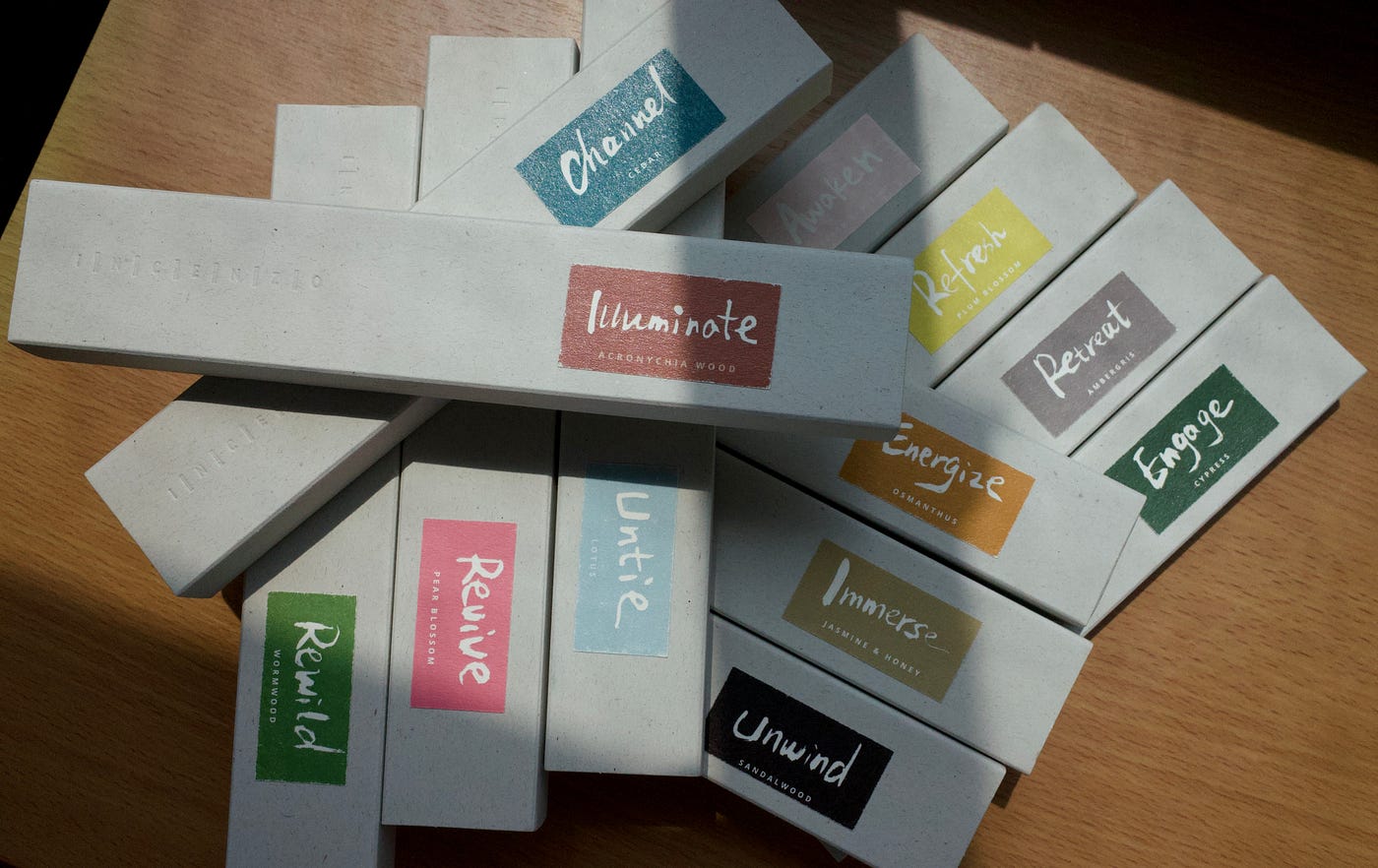
If you are choosing your first incense for home, begin with a scent you enjoy rather than a prescribed number of sticks. Unwind brings sandalwood’s warm, milky woodiness to a quiet pause at the end of the day. It is a choice for everyday fragrance, not a requirement for religious or ancestral offerings.
Each box contains 25 sticks, approximately 21 cm long, with a burn time of about 30–40 minutes per stick. A paper incense holder is included, so a separate decorative vessel is optional. Follow the holder’s instructions, use a heat-resistant surface that catches falling ash, and never leave burning incense unattended.
Explore Unwind sandalwood incense
Perhaps what we cherish most is that the smoke does not shout — it whispers. It invites not attention, but presence. In that presence, in those rising curls of scent, we find a quiet bridge: between past and present, mortal and divine, our daily selves and something greater.